
Tourist Composite Tickets
The Jaipur composite ticket — the state booking portal calls it the Jaipur Package — is a two-day pass to the state-run monuments and museums in Jaipur. An Indian adult pays Rs. 550, a foreign adult Rs. 1,700, and students less. Whether it is worth it is not a general question: it depends on your category, how many of the monuments on the list you will actually walk into, and whether City Palace is on your list — because City Palace is not on the pass.
The short answer, by category
- Foreign adult: yes, from the third monument. Amber Palace and Hawa Mahal alone cost Rs. 1,600 against a Rs. 1,700 pass; add one more monument at the Rs. 600 rate and you are at Rs. 2,200 — the pass saves you Rs. 500.
- Indian adult: no for the classic pair, yes at five. Amber and Hawa Mahal alone cost Rs. 300 against a Rs. 550 pass. You need three more entries at Rs. 100 to reach Rs. 600 and finish Rs. 50 ahead.
- Foreign student: level at two, ahead from three. Amber and Hawa Mahal at student rates come to exactly Rs. 800 — the price of the pass. Everything past those two is a saving.
- Indian student: Rs. 30 short at two. Rs. 100 at Amber plus Rs. 50 at Hawa Mahal is Rs. 150 against a Rs. 180 pass, so the pass only pays once a third monument is on your list.
What the pass costs
| Category | Pass price |
|---|---|
| Indian adult | Rs. 550 |
| Indian student | Rs. 180 |
| Foreign adult | Rs. 1,700 |
| Foreign student | Rs. 800 |
One caveat, and it matters more on this page than on any other on the site. These four figures are advertised on the state booking portal and repeated by three independent 2026 guides, but the portal’s price table is rendered in the browser and could not be read directly: no official page carried the numbers in a form we could fetch and check. Treat them as the advertised prices, not as a certified tariff, and confirm at the counter. Some pages — including the state portal’s own monument descriptions — still print an older composite schedule that the 1 January 2026 order superseded.
Two smaller points about the price. It is per person, and the student categories need a student ID at the counter. Children below 7 enter free at Hawa Mahal under the department’s published rule, so do not buy a pass entry for a child that age without asking first.
What the two-day validity actually buys
The pass is valid for two days from the visit date you select when you buy it. That is the whole of the time it buys: it does not extend opening hours, and it does not change the fact that Amber closes its day circuit at 17:30 while Hawa Mahal’s published window runs to 19:00.
Two days is one Jaipur itinerary, and that is the shape the pass was built for: Amber and Hawa Mahal and Jantar Mantar on one day, Albert Hall and Nahargarh on the other, with the smaller gardens and the tower filling the gaps. If your Jaipur stop is a single day, the pass’s second day is worth nothing to you — the arithmetic in the next section still applies, but the margin gets thinner because a one-day visitor rarely reaches the fourth or fifth entry.
If you are working out where to base yourself for those two days, hotels near Hawa Mahal splits the old-city options by price band.
Watch out for one circulating error here. Some 2026 commentary described the Jaipur pass as valid for ten days. It is not: the portal reads two days for the Jaipur Package and ten days for the Rajasthan-wide package. They are two different products at two different prices, and the ten-day figure belongs to the second one only.
What is on the list
The Department of Archaeology and Museums’ own scheme page names these Jaipur monuments:
- Amber Palace (Amber Fort)
- Hawa Mahal
- Jantar Mantar
- Albert Hall Museum
- Sisodia Rani Garden
- Vidhyadhar Garden
- Isarlat (Sargasuli)
- Nahargarh Fort
The portal’s package card has been reported as advertising 10 places. The two names beyond the department’s list could not be confirmed on any official page, so we print the eight names above rather than a total — and you should check the ticket you are sold against that list.
Five of those monuments have individual adult rates we can price against: Amber at Rs. 200 Indian and Rs. 1,000 foreign, Hawa Mahal at Rs. 100 and Rs. 600, and Jantar Mantar, Albert Hall and Nahargarh all at Rs. 100 and Rs. 600 — the last three on the same 1 January 2026 order that set the others. The three smaller ones, Sisodia Rani Garden, Vidhyadhar Garden and Isarlat, have no individual rate we could source, which means their entries are upside that the break-even below does not count.
Break-even, category by category
| Category | Pass | Amber + Hawa Mahal separately | Pass costs extra | Entries needed to break even |
|---|---|---|---|---|
| Indian adult | Rs. 550 | Rs. 300 | Rs. 250 | Five |
| Foreign adult | Rs. 1,700 | Rs. 1,600 | Rs. 100 | Three |
| Indian student | Rs. 180 | Rs. 150 | Rs. 30 | Three |
| Foreign student | Rs. 800 | Rs. 800 | Nothing — level | Two |
Work the first row properly, because it is the one that surprises people. An Indian adult buys Amber at Rs. 200 and Hawa Mahal at Rs. 100 — Rs. 300 against a Rs. 550 pass, so the pass is Rs. 250 worse. Add Jantar Mantar and Albert Hall at Rs. 100 each and you are at Rs. 500: still Rs. 50 short. The third of the Rs. 100 monuments, Nahargarh, takes you to Rs. 600 and Rs. 50 ahead. That is five entries — all three of Jantar Mantar, Albert Hall and Nahargarh, plus the two you were going to see anyway — and it has to happen inside two days.
The foreign adult row turns sooner because each entry is worth more. Amber at Rs. 1,000 plus Hawa Mahal at Rs. 600 is Rs. 1,600, Rs. 100 short of the pass. One more monument at Rs. 600 — Jantar Mantar, Albert Hall or Nahargarh — is Rs. 2,200, and the pass is Rs. 500 cheaper than paying at each gate.
Students sit either side of the line. A foreign student pays Rs. 500 at Amber and Rs. 300 at Hawa Mahal — exactly Rs. 800, the pass price, so the pass is a straight swap for those two and pure saving after that. An Indian student pays Rs. 100 and Rs. 50, which is Rs. 150 against a Rs. 180 pass: Rs. 30 short, and one more student entry at any of the other monuments closes it.
Two assumptions sit under that table, and both are stated rather than hidden. Student rates are the reported rates, not a table we could read — see the caveat above. And these are day-visit prices: Amber’s evening is a separate ticket, so nothing in this arithmetic buys you the light-and-sound show.
City Palace is not on the pass — and why that matters
City Palace is privately managed. It is not on the department’s composite list, it is not part of the Jaipur Package, and it sells its own ticket. This is the single misunderstanding worth clearing before you buy, because City Palace sits in the old city on the same day most visitors give to Hawa Mahal and Jantar Mantar. Nothing on this page pays for it: budget it as a separate entry, and do not count it as one of the entries in the break-even above.
The same goes for Amber’s evening: the fort’s night viewing and light-and-sound show are a separate ticket, so a day pass does not turn into an evening out.
The ten-day Rajasthan Package is a different product
Rajasthan sells a second composite: the Rajasthan Package, valid for ten days, priced at Rs. 1,300 for an Indian adult and Rs. 5,500 for a foreign adult, covering state monuments and museums across the state — the portal’s card advertises 42 places, a count we print as the portal’s own advertisement rather than as a verified list. These two prices are the best-sourced figures on this page: both were reported by the Times of India and the PinkCity Post when the tariff was set.
Do not merge the two. The Jaipur pass is two days in one city; the Rajasthan pass is ten days across the state and costs more than twice as much for an Indian adult. If your trip is Jaipur only, the state pass is money spent on monuments you will not reach. If you are going on to other cities, work out the state pass separately — the two-day Jaipur ticket is not a cheaper way to buy it.
Where and when to buy
Both channels exist: the state OBMS portal at obms-tourist.rajasthan.gov.in, and the ticket counters at the monuments themselves. Whether the counter charges exactly the portal price is not stated anywhere official, so do not assume a discount for buying online — assume the two channels exist and that the portal is the official one.
Buy it for the day you will start, not the day you land. The two days run from the visit date you select, so a pass bought for a day when you arrive at three in the afternoon has already spent one of its two days. And if your visit falls on 30 March, 18 April, 18 May or 27 September, Hawa Mahal is free under the department’s published list of free-entry days — a pass entry at Hawa Mahal that day is worth nothing extra, which shifts the break-even against the pass.
When it is not worth it
- You are an Indian adult seeing only Amber and Hawa Mahal. The pass costs Rs. 250 more than the two tickets.
- Your Jaipur stop is one day. Two days of validity is one of the things you are paying for, and five entries in one day is an ambitious day.
- City Palace is the point of your visit. It is excluded, so the pass buys none of it.
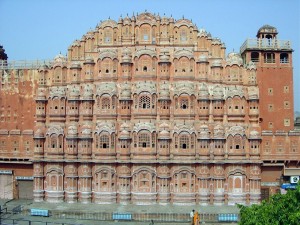
- You only want the Hawa Mahal photograph. The facade is on the street and costs nothing; a pass entry to the interior you will not walk into is wasted.
- You are travelling with children below 7. They enter free at Hawa Mahal, so a pass entry for them is money for nothing.
Quick answers
Is the Jaipur composite ticket worth it?
For a foreign adult, yes as soon as a third monument joins Amber and Hawa Mahal — Rs. 2,200 separately against Rs. 1,700. For an Indian adult, only if you will reach five entries; the classic two-monument pair is Rs. 250 cheaper bought separately.
How many monuments does it cover?
The department’s list names Amber Palace, Hawa Mahal, Jantar Mantar, Albert Hall Museum, Sisodia Rani Garden, Vidhyadhar Garden, Isarlat and Nahargarh Fort. The portal’s card has been reported as advertising 10 places; the extra two could not be confirmed, so check the ticket against that list when you buy.
Does it include City Palace?
No. City Palace is privately managed, is not on the department’s composite list, and sells its own ticket. Budget it separately.
How long is the Jaipur pass valid?
Two days from the visit date you select. Ten days is the Rajasthan-wide package, a different product at a different price.
Can students use it?
Yes, at Rs. 180 for an Indian student and Rs. 800 for a foreign student, with a student ID at the counter. Those two are reported rates — confirm them when you buy.
Where to read next
For the two monuments that decide the arithmetic, our Amber Palace page covers hours, tickets, gate and the elephant ride, and Hawa Mahal’s opening hours and entry fees covers the palace in the old city. Jantar Mantar is the third stop on most pass itineraries, and the Royal City Palace is the one you pay for separately.